Crayola Washable Markers on Amazon: A 9-Point Checklist Before Your Next Bulk Order
-
1. Verify authenticity before you click buy
-
2. Match the tip type to the age group
-
3. Understand what "washable" actually means
-
4. Run the numbers like a matrix calculator
-
5. Check what's actually in the box
-
6. Know the truth about Crayola markers and dogs
-
7. Plan the cap strategy before you need one
-
8. Set up your printing workflow first
-
9. Know the tool you're buying (and the tools you're not)
-
The Mistakes I Made, So You Don't Have To
I handle art supply orders for a K-5 after-school program. Four years in, I've made three marker-ordering mistakes I'm not proud of: a batch of counterfeit markers, wrong tip size for little hands, and a stained whiteboard that cost $130 to replace. This checklist is what I give every new staff member who's about to place a classroom supply order. If you're a teacher, a parent volunteer, or the person who "understands Amazon" on your school's payroll, this is for you.
There are nine points on this checklist. Each takes under a minute to verify. They exist because skipping them costs real money. A 5-minute check can save months of headaches—the cheapest insurance you'll find in the art supply budget.
1. Verify authenticity before you click buy
The counterfeit marker problem on Amazon is real. In March 2023, I bought a 128-pack of "Crayola" markers from a third-party seller. The listing photo looked perfect. What arrived smelled like chemical watermelon and snapped in half on the second use. Not a good look when third-graders are involved.
Check three things before adding to cart:
- Seller: "Ships from and sold by Amazon.com" or the official Crayola storefront. A third-party seller offering 20%+ below the usual price is a red flag, not a bargain.
- Listing age: Established listings with years of history are harder to fake. New listings selling in bulk volume deserve extra scrutiny.
- Recent review photos: Sort by most recent and look at what people photographed. Counterfeit batches get exposed in photos before text reviews catch up.
To be fair, some third-party sellers are perfectly legitimate—I've bought from a couple of dependable ones since. But until you know a seller, the risk isn't worth it on a classroom order.
2. Match the tip type to the age group
This was my first real mistake. I ordered a full set of fine-tip markers for K-2 classrooms. In my defense, they looked neater and more precise. In reality, five-year-olds don't need precision—they need a broad tip that survives being pushed down by a fist. We had 14 broken tips in the first month.
The rule I use now:
- Broad line: Pre-K through 2nd grade. Also good for group poster projects where coverage matters.
- Fine tip: 3rd grade and up. Better for detail work, more controlled motor skills.
- Both: If budget allows, stock broad-line for class bins and fine-tip for early finishers who want detail.
Check the tip type in the listing description. If it just says "Markers, 64 Count," it might be one tip type only. Click through and confirm.
3. Understand what "washable" actually means
Here's the part I learned the expensive way. Crayola washable markers wash off skin and most fabrics with regular laundering. They are not washable on:
- Drywall
- Unsealed wood
- Whiteboard surfaces
- Certain finished plastics
That whiteboard incident? The board was an older melamine one with minor pitting. The marker ink got into the scratches, and no amount of cleaning would pull it out. $130 to replace, straight to the trash. Nobody warned me about melamine pitting. Now I tell everyone: if a surface is already scratched or stained, washability doesn't apply.
The formula uses surfactants that release dye from fabric fibers with water and detergent. On porous or damaged surfaces, those same surfactants don't have a path—the dye gets trapped. Washability is real, but it's conditional on the surface being intact.
4. Run the numbers like a matrix calculator
Least glamorous step, most useful. When you see a 192-pack at $34.99 and a 64-pack at $12.99, which is actually cheaper? Let's do the math:
192-pack: $34.99 ÷ 192 = $0.18 per marker. 64-pack: $12.99 ÷ 64 = $0.20 per marker. Three 64-packs = $38.97 for 192 markers. The bulk pack saves about $4—worth it if you have storage and need to replace entire class sets at once.
But here's the trap: if you're assembling 24 mini-kits of 8 markers each, a 192-pack doesn't cover all 24 sets. You need two 96-packs or to restructure. A matrix layout helps: price per marker, per tip, per color count, and shipping origin. Laying it out in rows and columns stops you from doing mental math while juggling purchase orders.
The hidden cost is shipping and tax. Third-party sellers often list lower prices but add $8–12 in shipping. Add everything before comparing.
5. Check what's actually in the box
This sounds obvious. "Check what's in the box." But the number of Amazon listings that show a 152-color palette while selling a 64-count set is infuriating. The product photo shows "mountain meadow" and "sunset orange." The listing text says "assorted colors." You get what the text says, not what the photo shows.
Read the bullet points. Count the markers. Verify the color family—does it include multicultural skin-tone shades? Metallics? Neon? "Assorted" means you get whatever Crayola sends. For most classrooms, that's fine. For a specific project, it's not.
Multicultural markers matter. The standard 24-count box has one "peach" and one "brown"—not enough for a classroom. The Colors of the World sets exist for a reason. If your students draw themselves, order accordingly.
6. Know the truth about Crayola markers and dogs
"Are Crayola markers toxic to dogs?" is a common search—and a common question from pet-owning staff. The answer: Crayola markers are non-toxic (ACMI AP-certified) for humans. For dogs, it's more nuanced.
The ink isn't formulated for consumption, but it's not a poison either. A dog that chews a marker usually gets a minor stomach upset at worst. The bigger risk is the cap—a marker cap can cause choking or an intestinal blockage if swallowed. Barrel pieces too.
If a dog chews a Crayola marker: remove any pieces, rinse the mouth with water, and call your vet. If the cap or barrel pieces were swallowed, that's a vet visit—often with imaging to check for obstruction.
The lesson: keep marker bins off the floor, in enclosed containers. Dogs can't read "non-toxic."
7. Plan the cap strategy before you need one
You will lose caps. Not occasionally. You will lose a surprising number of caps over a school year. Kids take them off, put them down, roll them under furniture. It happens.
For pre-K, the "cap in the other hand" rule works: one marker at a time, cap stays in the non-drawing hand, cap goes back before the next marker. For larger groups, designate a cap bin during coloring time and match them back at the end. It sounds controlling. It halves cap loss—we went from losing 30 caps per semester to maybe 10.
The economics: a 64-count box costs about $0.20 per marker. Individual replacement markers can cost $1.50 each. When a marker dries out but its cap is lost, you're paying 1.5x for a replacement. The caps matter.
8. Set up your printing workflow first
If you're buying markers for coloring pages, a working printer is the silent dependency. Markers without something to color are just scented plastic sticks.
Check your printer drivers before the markers arrive. Brother printers, specifically, need updated drivers regularly. A driver mismatch can cause misaligned prints, poor color accuracy, or a stalled print queue. In 2024, a Windows update silently disabled our Brother driver, and I lost an afternoon reinstalling it—the same afternoon I'd planned to prep coloring packets for a first-grade unit.
Practical steps: update printer drivers at the start of the school year, test-print a coloring page, and verify the paper you have works with marker ink. Standard copy paper is barely OK—24 lb bond (about 90 gsm) handles ink much better without bleed-through. Sort the drivers, order the paper, then buy the markers.
9. Know the tool you're buying (and the tools you're not)
This sounds like it shouldn't need saying, but search data suggests people do look up both "crayola washable markers" and "how to write with a fountain pen" in the same research session. They are different tools for different purposes.
Crayola markers are coloring, drawing, and early-writing tools. They're sturdy, easy to hold, and made for broad, visible strokes. They are not calligraphy pens, fountain pens, or cursive tools. Handwriting instruction for older students involves different grip dynamics, pressure sensitivity, and maintenance needs.
If you're setting up a writing skills program, markers aren't a substitute for penmanship tools. Markers make progress visible and reduce friction for young kids, but for older beginners learning cursive, a fountain pen is its own thing. Keep both in mind. Don't mix the objectives.
The Mistakes I Made, So You Don't Have To
Three documented failures shaped this checklist.
In 2022, the counterfeit 128-pack. $24 straight to the trash. I knew I should verify the seller, but thought "how bad could a marker listing be?" The answer: bad enough.
In early 2023, the fine-tip-for-kindergarten mistake. 14 broken tips in one month. Looking back, I should have asked the teachers about their students' motor skills first. At the time, I was optimizing for what looked good in the catalog, not what worked in little hands.
In September 2023, a marker found its way into a dog's mouth—the assistant principal's certified therapy dog, of all things. The dog was fine after a minor upset, but it was a scare and an uncomfortable conversation. Now the rule is firm: markers go in the bin at the end of every class, no exceptions.
The common thread? Every single problem was preventable with a few minutes of verification. Saved time isn't saved money when you're spending it on reorders, replacements, and apologies.
"5 minutes of verification beats 5 days of correction."
The checklist goes from sticky note to staff protocol this year. I still update it every time I see a new failure mode. Don't skip the boring steps. They're boring because they work.
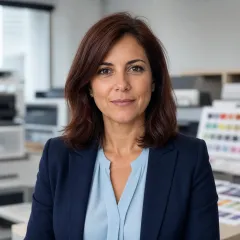
Elena Baptista
Elena Baptista is an office printing and imaging analyst covering laser and inkjet printers, multifunction devices, copiers, label and receipt printers, ink cartridges, toner cartridges, and drum units. She applies ISO/IEC 24734, ISO/IEC 24711, and ISO/IEC 19798 methods while comparing print speed, first-page time, duplex throughput, duty cycle, page yield, coverage assumptions, resolution, color consistency, energy use, and maintenance intervals. Her guides help offices, schools, dealers, and procurement teams match output volume, media handling, connectivity, consumable economics, service access, and fleet-management requirements.