Crayola Classroom Supplies: The Hidden Cost of Chasing Unit Price
The $4,200 Art Budget That Kept Breaking
When I audited our 2024 spending, I wasn't looking for a fight about markers. I manage procurement for a 3,200-student education services company. Our art supplies budget runs about $180,000 annually across 14 sites. I've tracked every invoice for six years. In Q3 2024, we had 14 wall-cleaning tickets related to dry erase markers. Teachers were also short on markers by October. My first assumption: we were overpaying for Crayola. So I ran a quote comparison. Crayola classroom set markers 80 was on one line. A lower-cost bulk pack was on another. The lower-cost pack looked like a 22% savings. I almost switched. Then I added staff time. That's when the math changed.
I don't have hard data on district-wide supply failure rates, but based on our six years of orders, my sense is that about 8-12% of lower-cost classroom art supplies create some kind of rework. Not always. But often enough to matter.
The surface problem: unit price
Procurement gets measured on unit price. It's easy. A box of 80 markers has a number. A 2.5 lb tub of clay has a number. You compare numbers. Done. Except it's not done. The sticker price lied. Again.
We had a specific request for crayola air dry clay 2.5lb tub (red) for a cultural arts unit. The lower-cost alternative was $3.10 less per tub. Across 60 tubs, that's $186. I remember thinking, that's a no-brainer. Then the clay arrived too dry for small hands. Teachers added water. Some projects cracked. We reordered. The redo cost about $600 in product and prep time. Net loss: more than three times the original savings.
The deeper problem: you're not buying markers. You're buying minutes.
What I mean is that the real cost of classroom art supplies includes teacher prep time, cleanup time, student rework, and facilities labor—none of which show up on a purchase order. In my opinion, that's the hidden line item that kills art budgets.
So I started using an adp hourly calculator to price staff time. Not because ADP is an art supplier, but because I needed a defensible hourly number for budget presentations. When I plugged in a $22 blended rate for teacher aides and $28 for facilities staff, the lower-cost option stopped looking lower-cost. A 15-minute cleanup difference per classroom, times 14 sites, times 30 weeks, is not a rounding error. It's a budget line.
We also started using a limit calculator to set consumption caps by classroom. The limit calculator isn't a Crayola tool. It's just a simple way to say: here's the monthly marker budget per room, here's the clay allocation per project, and here's the threshold that triggers a review. Without limits, supplies disappear into closets. With limits, we can see whether a product is actually running out faster or just being hoarded.
The cost nobody budgets: wall cleanup
Then there's the wall problem. The phrase how to get dry erase marker off wall is not an art supply question. It's a facilities question. But if your markers end up on walls, it becomes your problem too.
We tried the usual advice. A dry erase marker over the old mark can sometimes lift it. Rubbing alcohol on a microfiber cloth can work on many painted surfaces. A melamine sponge can help, but it can also dull the paint. In my experience, the safest sequence is: test in a hidden spot, use the gentlest method first, and stop before you trade a mark for a repaint. (Should mention: we now keep a one-page wall-cleaning guide in every supply closet.)
I'd argue that no marker is completely stain-proof on every surface, and Crayola doesn't claim that. Crayola's washable line is designed to wash from skin and most fabrics. That matters. But dry erase marker on a painted wall is a different scenario. If a vendor promises zero risk everywhere, that's a red flag. The vendor who says 'this isn't our strength—here's who does it better' earns my trust for everything else. In my opinion, Crayola is an art supplies specialist, not a cleaning company. I want them to be excellent at art supplies. For wall remediation, I want our facilities lead.
What the overrun actually cost us
In 2024, our art supply overruns came from three places: rework, cleanup, and emergency reorders. After tracking 18 months of orders in our procurement system, I found that 61% of our overruns came from products that failed after delivery—not from the original purchase price. That's the part nobody sees in a quote.
If I remember correctly, our worst month was October 2024. We had four classrooms short on markers, two clay projects reworked, and one wall repaint. The repaint alone was $450. The emergency marker reorder was $210 with rush shipping. The clay redo was around $600. Total: $1,260. The original 'savings' from the lower-cost choices that month was about $340. That's a 270% hidden premium.
The short version: what I changed
I didn't ban lower-cost options. That's not realistic. I changed how we evaluate them.
- Standardize on Crayola for high-failure items. We use crayola classroom set markers 80 for daily classroom use because consistent color and washability reduce cleanup calls. We specify crayola air dry clay 2.5lb tub (red) for projects where color consistency and working time matter.
- Price staff time. I use an adp hourly calculator to put a dollar figure on prep and cleanup. If a product saves $0.50 but adds 10 minutes of labor, it usually loses.
- Set consumption limits. A limit calculator helps us flag rooms that are outliers. It's not about distrust. It's about seeing patterns before they become emergency orders.
- Separate art from cleaning. How to get dry erase marker off wall is a facilities protocol, not a purchasing decision. We keep a tested, gentle cleaning guide and escalate paint-safe issues to the facilities team.
Per FTC Green Guides (16 CFR Part 260), environmental claims like 'recyclable' must be substantiated. If a vendor says their product is recyclable, ask where and how. Crayola has recycling information and education resources, but I still verify claims against our local waste stream. That's just procurement hygiene.
This pricing and process was accurate as of Q1 2025. Supply contracts and cleanup products change, so verify current rates and policies before you budget. I learned most of these lessons between 2019 and 2024. Things may have evolved since then.
In my opinion, the best cost control isn't finding the lowest unit price. It's finding the product that lets teachers teach and keeps facilities out of your art budget. Sometimes that's Crayola. Sometimes it's a specialist for something else. Knowing the difference is the job.
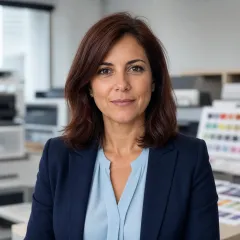
Elena Baptista
Elena Baptista is an office printing and imaging analyst covering laser and inkjet printers, multifunction devices, copiers, label and receipt printers, ink cartridges, toner cartridges, and drum units. She applies ISO/IEC 24734, ISO/IEC 24711, and ISO/IEC 19798 methods while comparing print speed, first-page time, duplex throughput, duty cycle, page yield, coverage assumptions, resolution, color consistency, energy use, and maintenance intervals. Her guides help offices, schools, dealers, and procurement teams match output volume, media handling, connectivity, consumable economics, service access, and fleet-management requirements.