Crayola, Bentgo, and Printer Troubles: A School Supply Emergency Guide
School supply emergencies are real. I know because I get the calls when a classroom order goes sideways. I'm a procurement coordinator at a regional school supply distributor, and I've handled 200+ rush orders in six years—including same-day turnarounds for schools that thought they'd missed the deadline. In March 2024, 36 hours before a district art fair, a school called needing 60 packs of Crayola watercolor markers. Normal turnaround is five business days. We found a local distributor, paid rush fees, and delivered with 12 hours to spare. The alternative was cancelling the art fair.
The point isn't to brag. It's to show what I see every fall: schools are juggling art lesson plans, lunch programs, and the office printer at the same time. This guide compares four back-to-school decisions I get asked about constantly. For each one, I'll lay out the two common choices, compare them on practical use, and give you a clear recommendation. And I won't tell you to buy the most expensive option. I'll tell you which option will cost you less in stress, time, and replacement fees over the whole year.
Crayola Watercolor Markers vs. Classic Crayola Markers
Early in my procurement career, I assumed the lowest-cost marker was the smartest choice. Three stained uniform complaints and one cancelled art project later, I started looking at total cost.
Teachers ask for Crayola by name. The brand's reputation isn't magic—it's consistent color, non-toxic formulas, and a recycling program that schools care about. But there's a real difference between Crayola watercolor markers and classic broad line markers.
Watercolor markers behave like a compact palette. The ink spreads with a wet brush, so kids can make soft washes, blend colors, and add shading without dragging out paint sets. Classic broad line markers give you a bolder, more opaque line. They're easier to control and dry faster.
Cleanup is the part I always explain. Most Crayola washable formulas clean up well when treated quickly. I've also seen a watercolor marker stain a school uniform after it sat in a laundry basket overnight. That's not a product failure—it's misuse. The same is true for any washable art supply.
From the outside, markers are markers. The hidden reality is that watercolor markers require a bit more supervision and a longer drying time. If your students are in K-2, classic broad line markers are probably the better choice. For grades 3 and up, Crayola watercolor markers open up more techniques without a full paint setup.
One more note: if a marker is labeled recyclable, that claim needs to be truthful and substantiated per FTC Green Guides. Before you build a classroom recycling project around a product, ask the supplier for the current product list rather than assuming every marker qualifies.
So which one?
Choose classic broad line for younger students and quick projects. Choose Crayola watercolor markers when you want painting effects without buying brushes and watercolor pans.
How to Paint Crayola Air Dry Clay: Acrylic vs. Tempera
One of the most searched questions on school supply lists is 'how to paint Crayola air dry clay.' It's a fair question because clay doesn't behave like paper. I've tested both main routes with classroom clients: acrylic paint and tempera paint.
Acrylic is my go-to for keepsakes. It dries to a tougher, slightly glossy finish and seals the clay surface so dust and smudges don't ruin the work. It usually needs two coats, though. Tempera is cheaper and easier to clean up, but it can flake on smooth clay unless you seal it. If the project will be handled a lot, tempera alone may disappoint.
If I remember correctly, Crayola air dry clay needs about 24 to 48 hours to dry completely, depending on thickness. I've watched teachers paint too early and end up with cracks. The surprise wasn't the paint choice. It was that students who used acrylic felt prouder of their finished pieces because the coating looked more like real art.
For a quick classroom project, tempera is fine. For a Mother's Day gift or a school display, use acrylic. And if you only have one day, plan for two coats—or rather, plan for one coat plus enough time for the second coat the next morning.
So which one?
Acrylic for anything that gets handled or displayed. Tempera for a fast, low-budget lesson. Either way, make sure the clay is fully dry before you touch it with a brush.
Bentgo Lunch Box vs. Cheaper Lunch Containers
I almost didn't include lunch boxes in a procurement guide. Then a school called in August with a classroom set of 24, and the cheaper containers had already cracked by October. Let's compare.
A Bentgo lunch box has compartments, a secure lid, and enough durability for daily school use. It costs more upfront. Cheaper containers cost less and are easy to replace, but they also have thinner plastic and weaker hinges. Drop one on a hard floor, and the lid can pop off—then you're hunting for a rolling apple instead of teaching.
The tricky part is context. For a single child, a cheaper container is probably fine. For a classroom, an entire after-school program, or a school with limited staff, the Bentgo lunch box usually pays for itself because you're not replacing lids every month. The best part of a durable lunch box isn't the brand; it's not having to think about it during a chaotic lunch count.
If you're ordering custom labels for 30 Bentgo lunch boxes, you'll also need a printer that works. That's the perfect bridge to the last comparison.
So which one?
If you're buying one lunch box for your own kid, the cheapest reliable container is fine. If you're buying a full classroom set, a Bentgo lunch box or something similarly sturdy is worth the extra upfront cost.
Why Does My Printer Keep Going Offline? Fix It vs. Outsource It
This is the question I hear more than any other school operations question: why does my printer keep going offline? People assume it's a hardware failure. The reality is often a software or network setting.
Before you buy anything, check the 'Use Printer Offline' setting. Restart the print spooler. Forget the printer from your computer and re-add it. In my experience, this fixes most cases. I want to say it's 70% or more, but don't quote me on that—I don't have the exact metric in front of me.
If the printer keeps going offline after those steps, you have two real options. You can outsource the job to an online print service, or you can replace/lease the printer. For standard school materials—permission slips, labels, flyers—online printers like 48 Hour Print work well. According to USPS pricing effective January 2025, a First-Class Mail large envelope (1 oz) costs $1.50. If mailing flyers is part of the plan, factor that into your total cost.
If you're thinking about replacing the printer, use a lease calculator before you sign anything. A lease calculator shows the total cost of ownership, not just the monthly payment. It should include overage fees, maintenance, and buyout terms. The value of guaranteed turnaround isn't speed—it's certainty. For a school, certainty can be worth more than the few dollars you save with an unreliable setup.
The surprise wasn't the printer hardware. It was how many schools paid for emergency printing before checking a single setting. I only believed the 'Use Printer Offline' fix after ignoring it for two hours and paying $120 for an urgent color print job.
So which one?
Fix it if the offline issue disappears after a reset. Outsource it if you're on a tight deadline and the printer is still misbehaving. Run a lease calculator if you're considering a replacement—especially for a small school budget, because a low monthly payment can hide high per-page costs.
A Final Word: Small Orders Still Matter
The common thread in all four comparisons isn't Crayola or Bentgo—it's total cost of ownership. The cheaper choice today isn't always the best choice by May.
I've also learned that small doesn't mean unimportant. When I was starting out, the vendors who treated my $200 orders seriously are the ones I still use for $20,000 orders. So if you're a teacher buying one pack of Crayola watercolor markers or a coordinator replacing a printer, don't settle for being ignored. Ask for the same advice and the same respect as a large district.
Take the time to compare the two options, choose based on your real timeline and budget, and you'll spend more of the year teaching and less of it fixing classroom emergencies.
Whether you're painting Crayola air dry clay or trying to get labels onto 30 Bentgo lunch boxes, the calculation is the same: what will this decision cost in time, stress, and replacements over the whole year?
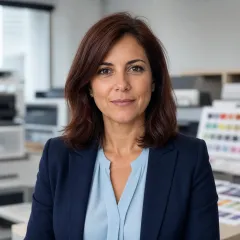
Elena Baptista
Elena Baptista is an office printing and imaging analyst covering laser and inkjet printers, multifunction devices, copiers, label and receipt printers, ink cartridges, toner cartridges, and drum units. She applies ISO/IEC 24734, ISO/IEC 24711, and ISO/IEC 19798 methods while comparing print speed, first-page time, duplex throughput, duty cycle, page yield, coverage assumptions, resolution, color consistency, energy use, and maintenance intervals. Her guides help offices, schools, dealers, and procurement teams match output volume, media handling, connectivity, consumable economics, service access, and fleet-management requirements.